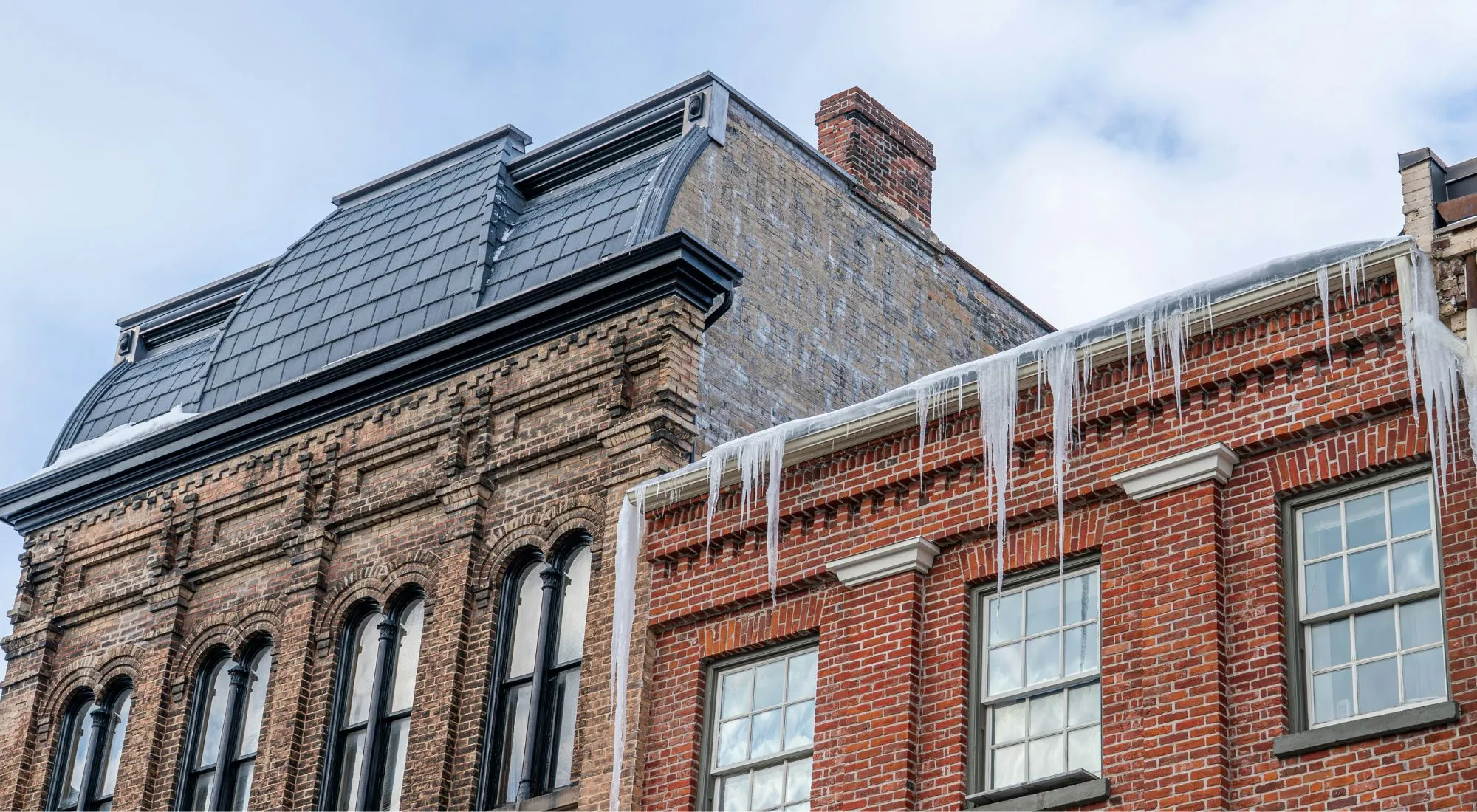
Ice dams can cause frustrating leaks and water damage, especially when they return each winter. If you’ve dealt with ice buildup along your eaves, you want a solution that addresses what’s causing it.
Understanding how heat escapes into your attic is the first step toward preventing ice dams on your roof. Air sealing, proper insulation, and adequate ventilation can help reduce snowmelt and the ice buildup that follows.
This guide explains how those three measures work together, what to check in your attic, and what to do if an ice dam has already formed.
What Is an Ice Dam, and How Does It Form?
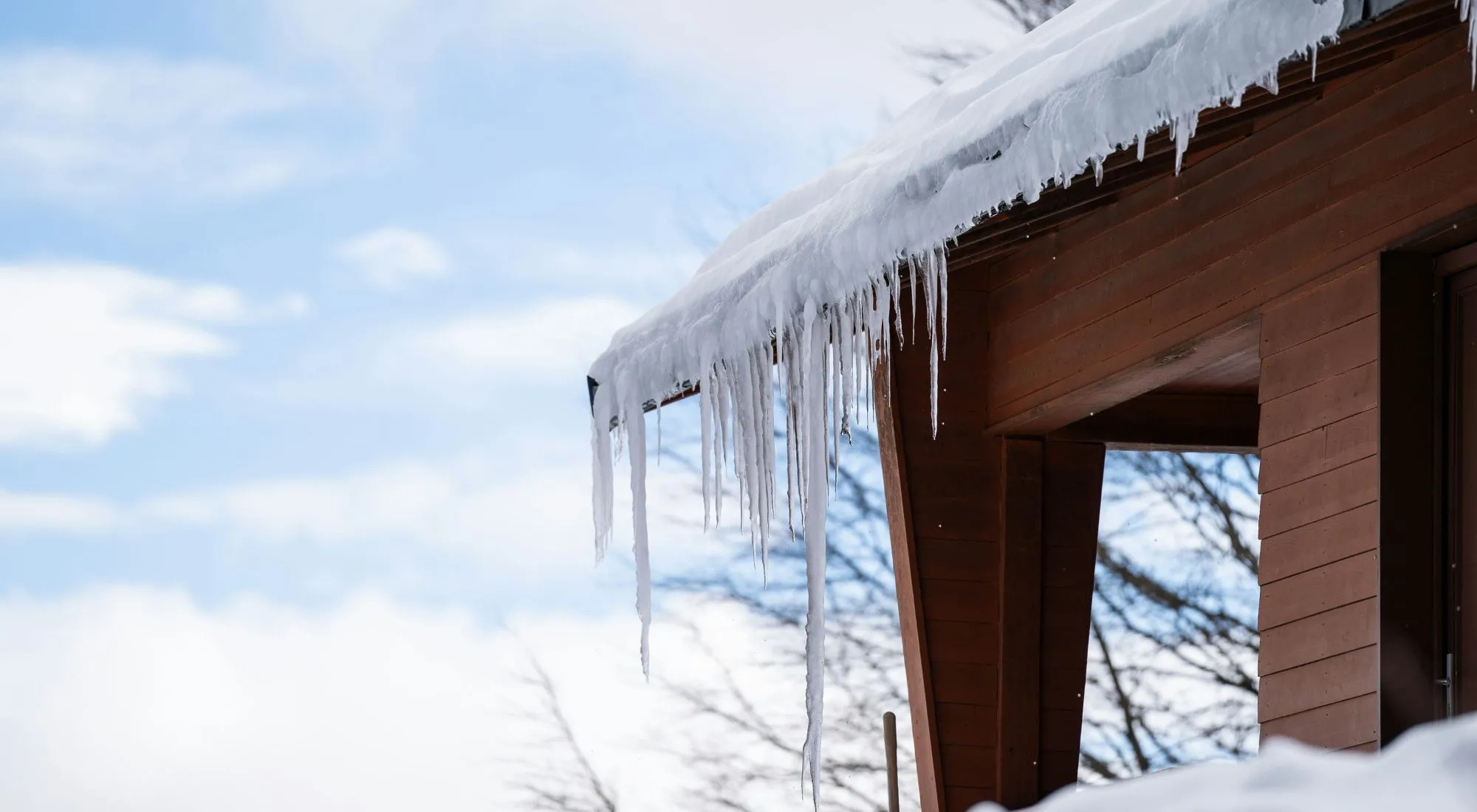
An ice dam is a ridge of ice that forms along the edge of a roof and prevents melting snow from draining. Here’s how it develops:
- Heat from the house leaks into the attic.
- The warm roof deck melts the snow above it.
- Meltwater runs down to the cold eaves.
- The water refreezes into a ridge of ice.
- New meltwater backs up behind the ridge.
- Water pushes under the shingles and into the decking.
Ice dams are common on the roofs of South Jersey homes. Freeze-thaw swings are common, shore-area nor’easters drop wet, heavy snow, and many older homes were built before modern ventilation and insulation standards.
Inadequate ventilation is the most common cause, though heavy snow loads can create dams on well-vented homes too.
Can Ice Dams Cause Roof Damage?
Yes. Backed-up water can get under shingles and cause stained ceilings, wet insulation, mold, rotted decking, and structural compromise. How bad it gets depends on how long the water sits.
Most of the damage happens where you can’t see it: in the attic and beneath the shingles.
That’s why Apex East Roofing photographs and videos what it finds and uses drone imagery on every project. Seeing the problem makes the fix easier to understand.
Watch for these possible signs of damage from ice dams:
- Ceiling stains or bubbling paint
- Peeling paint near exterior walls
- Damp or matted attic insulation
- Moisture, frost, or daylight at the eaves
These are also signs your roof needs inspection. Mold can start growing within a day or two of moisture intrusion, according to EPA moisture and mold guidance.
The team at Apex checks ventilation, insulation gaps, and signs of past water intrusion, then follows up right away with honest recommendations. There’s no pressure and no obligation. Our free roof inspections show you what’s happening in your attic before the next freeze.
Request a free inspection or book an inspection online.
3 Ways To Help Prevent Ice Dams on Your Roof
Preventing ice dams on your roof starts with limiting heat loss into the attic and allowing cold air to circulate beneath the roof deck. These three improvements work together to address uneven roof temperatures and reduce the conditions that lead to ice buildup.
#1: Improve Attic Ventilation
Start by checking that attic vents are clear and that the ventilation system provides adequate airflow. Blocked soffit vents may need to be cleared, while missing or undersized vents may require a professional assessment.
Common problems include:
- Missing, blocked, or undersized vents
- Insulation stuffed into the soffits, which blocks airflow
- Older South Jersey homes built before modern vent-sizing requirements
Apex’s crews photograph soffits and vents during a visit, so you can see a blocked vent instead of taking our word for it. Proper attic ventilation is part of how we approach every residential roof.
#2: Address Gaps in Attic Insulation
Check the attic floor for thin, compressed, or missing insulation. Filling gaps and bringing insulation to an appropriate level helps limit heat transfer from the living space to the roof above.
Look for:
- Thin spots or gaps in coverage
- Insulation compressed or pushed back around the eaves, where dams form first
- Uneven depth across the attic floor
Adding insulation in the off-season costs less and disrupts less than emergency work in the middle of a storm.
#3: Seal Air Leaks Into the Attic
Seal gaps around attic hatches, plumbing penetrations, wiring, and other openings that allow warm indoor air into the attic. Some areas, including recessed lights and heat-producing equipment, require specific materials and clearances, so professional assessment can help identify the right approach.
Check these leak points:
- Recessed lights
- Attic hatches
- Plumbing and wiring penetrations
- Bath fan ducts
Apex East Roofing can assess your attic and recommend improvements to help reduce heat loss and prevent ice dams.

Frequently Asked Questions About Roof Ice Dams
How Can I Remove Ice Dams From My Roof?
Removal limits immediate damage but doesn’t prevent the next dam. Safe options include pulling snow off the lower roof with a roof rake from the ground, laying calcium chloride ice melt in tube socks across the dam, or hiring a pro for steam removal.
Avoid chipping away at ice with hammers or axes, which can crack shingles, and skip rock salt, which can damage roofing materials and surfaces below. Never climb onto an icy roof to remove a dam.
Removing an ice dam addresses the immediate buildup, but preventing it from returning means addressing heat loss and airflow in the attic. Heat tape may help keep drainage paths open, but it doesn’t replace proper air sealing, insulation, and ventilation.
Are Ice Dams Covered by Insurance?
Sometimes.
Coverage depends on your policy, your insurer’s guidelines, and the documented cause of damage. Sudden damage is treated differently from damage tied to neglected maintenance.
To strengthen a claim:
- Take photos and video right away.
- Get a written inspection report.
- File promptly.
- Keep records of all communication with your insurer.
Apex East Roofing coordinates with insurance companies to help determine whether repairs may be covered, and our inspection documentation gives you a clear record. Prevention work typically costs far less than drywall, decking, and mold remediation.
When Should You Schedule an Ice Dam Inspection?
Fall is the best time, before the first freeze. Fixes cost less and disrupt less than emergency work during a storm.
Spring is the second window. After a hard winter, an inspection can catch hidden water intrusion and decking damage before it spreads.
A good inspection covers:
- Vent function and sizing
- Insulation gaps
- Air leaks
- Eave condition
- Past water staining
Apex East Roofing will document the attic with photos, video, and drone imagery, so you can see exactly what we see.
Get Help Preventing Ice Dams From Apex East Roofing
If ice dams keep returning, a roof inspection can help you understand which improvements your home needs. Apex East Roofing looks at how your roof and attic work together, with photos that help explain our findings and recommendations.
We’re a family-owned, licensed, and insured roofing company based in Northfield and serving South Jersey. Our team will explain what needs attention and let you know when the work calls for another contractor.
Ready to take the next step toward preventing ice dams on your roof? Book a free roof inspection online to discuss your concerns and get recommendations for your home.