Choosing a roofing system can get complicated quickly, especially when options that look similar can perform very differently once they are installed. Standing seam metal roofing is a good example: the clean appearance may catch your attention first, but the way the panels connect, fasten, and handle weather is what really sets the system apart.
Understanding those details can make it much easier to decide whether this type of roof fits your property, budget, and long-term expectations.
In this guide, we’ll explain what a standing seam metal roof system is, how the system works, how installation is handled, and more.
Table of Contents
- What Is a Metal Standing Seam Roof?
- The 2 Most Common Types of Standing Seam Metal Roofs
- Materials Used for Standing Seam Metal Roofs
- Standing Seam Metal Roof Installation Process
- What Homeowners Want To Know About Standing Seam Metal Roofing
- Upgrade to the Beauty and Durability of Standing Seam Metal Roofing With Apex East Roofing
What Is a Metal Standing Seam Roof?
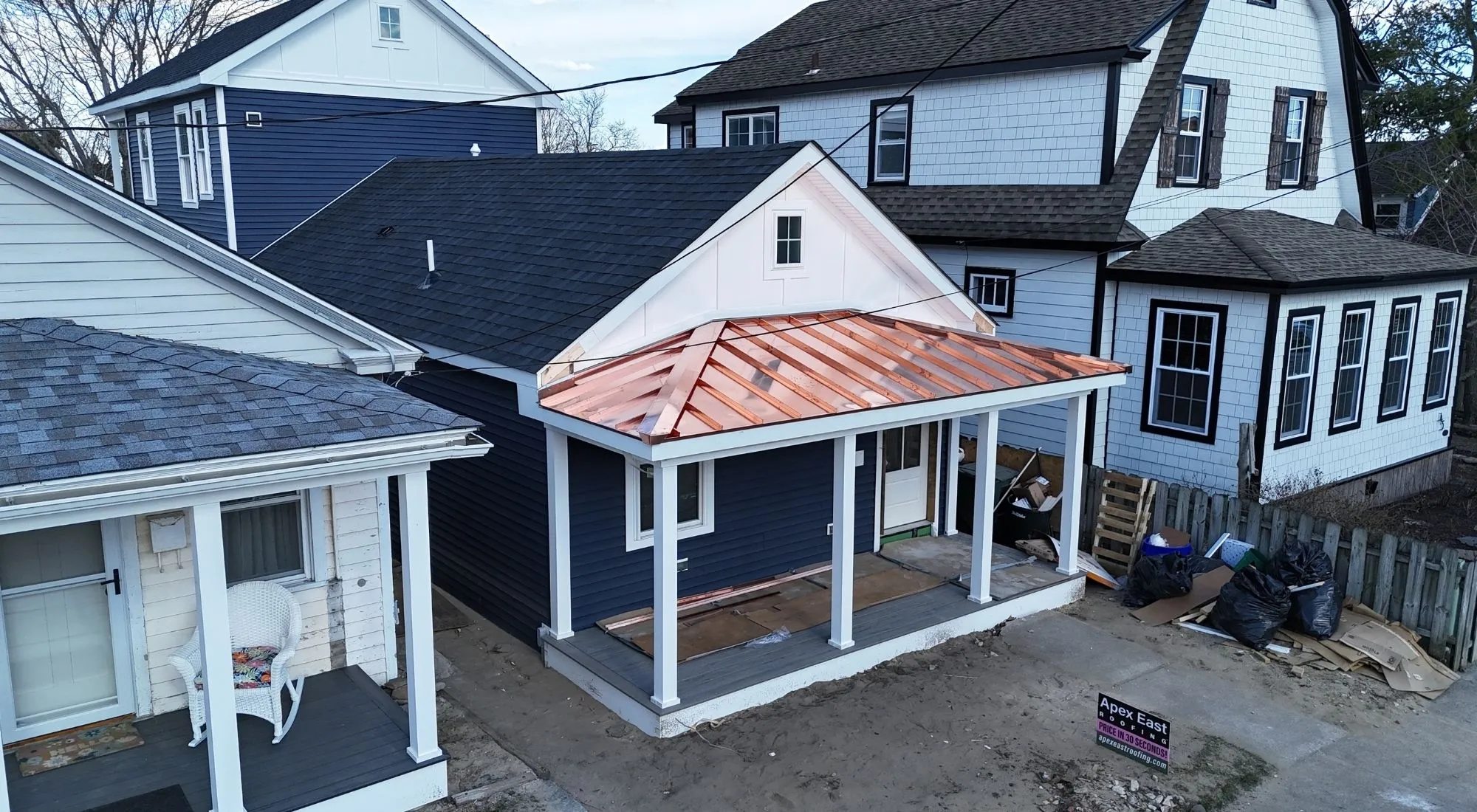
A standing seam metal roof uses broad metal panels joined by raised vertical seams, with most fasteners concealed beneath the surface. The result is a streamlined roof with flat panels and narrow vertical lines. Unlike systems with exposed screws, standing seam roofing protects most attachment points beneath the panels. Raising the connections above the roof surface also helps keep them away from much of the water draining down the roof.
The Meaning Behind “Standing Seam”
The name comes from the raised seams where neighboring panels connect. Depending on the system, these edges may snap together or be mechanically folded. Their elevated position creates the roof’s distinctive appearance while keeping panel joints above the primary drainage surface.
The Anatomy of a Standing Seam Metal Roof
Several components work together to form a complete standing seam roof:
- Metal panels: Form the main exterior roofing surface
- Standing seams: Join neighboring panels above the drainage surface
- Clips or concealed fasteners: Secure panels while remaining covered
- Roof decking: Provides the structural base
- Underlayment: Adds protection between the decking and panels
- Flashing: Manages water around valleys, penetrations, walls, and edges.
- Trim: Finishes ridges, eaves, rakes, and other roof edges
These components work together to protect the property. Proper preparation, flashing, fastening, and seam installation all matter.
The 2 Most Common Types of Standing Seam Metal Roofs
Snap-Lock Standing Seam Panels
Snap-lock panels have shaped edges that press or snap together during installation. They are typically secured with concealed fasteners and require less field seaming than mechanically seamed systems. They are common on residential and commercial roofs due to their quick installation and weather resistance.
Mechanically Seamed Metal Panels
Mechanically seamed panels are joined and then folded or crimped with specialized equipment. Systems may use single- or double-lock seams depending on project requirements. Their tighter connections can suit roofs that need greater weather resistance or lower-slope applications, depending on the system. Double-lock configurations add another fold for a tighter closure.
Not sure which standing seam system fits your property? Schedule a free inspection with Apex East Roofing to discuss your roof, project needs, and available options.
Materials Used for Standing Seam Metal Roofs
Standing seam describes how the panels connect, not the metal itself. Common options include:
- Steel: Strong, durable, and widely used, often with protective coatings or paint.
- Aluminum: Lightweight and corrosion-resistant, making it useful where moisture or salt exposure is a concern.
- Copper: Durable, distinctive, and known for developing a natural patina.
- Zinc: Corrosion-resistant and long-lasting.
The right material depends on budget, roof design, local exposure, appearance, and maintenance expectations. No single option is best for every property.
Not sure which roofing system fits your property? Apex East Roofing offers free inspections to assess your roof and explain your options before you move forward.
Standing Seam Metal Roof Installation Process
Installation begins with evaluating the roof deck and repairing damaged areas if needed. The contractor then installs underlayment, measures or fabricates panels, secures them with concealed fasteners, and locks or mechanically seams adjoining panels.
Flashing and trim are added around edges, valleys, and penetrations before the finished roof is inspected. Because many installation details become hidden afterward, Apex East Roofing provides a clear quote before the project, and photos, videos, and drone imagery throughout the project so customers can see the work being completed.
What Homeowners Want To Know About Standing Seam Metal Roofing
How Long Does a Standing Seam Metal Roof Last?
A properly installed standing seam metal roof can often last 40 to 80 years or more. Actual lifespan depends on:
- Material
- Coating
- Installation quality
- Weather exposure
- Roof design
- Maintenance
- Physical damage
What Is the Difference Between a Metal Roof and a Standing Seam Metal Roof?
A metal roof is a broad category that includes several styles. A standing seam metal roof is a specific system with raised seams and concealed fasteners, while other metal roofs may use exposed screws through the panels.
Keeping most fasteners covered helps limit direct exposure to rain, sunlight, and other weather. The exact fastening method varies by panel profile and manufacturer.
What Are the Disadvantages of a Standing Seam Roof?
The main disadvantages of a standing seam roof include:
- Higher cost: Usually more expensive upfront than asphalt shingles and some exposed-fastener metal roofs.
- Specialized installation: Panel alignment, fastening, and seaming require experience.
- Repair complexity: Replacing panels can involve separating neighboring panels.
- Oil canning: Broad panels may develop visible waviness.
- Slope limitations: Some systems require specific minimum roof pitches.
These considerations should be weighed against the system’s durability and long-term performance.
For experienced guidance, talk with Apex East Roofing. Our residential and commercial roofing experience across South Jersey can help you compare standing seam metal roofing with other options.
What Are the Benefits of a Standing Seam Metal Roof?
Standing seam roofing combines long-term durability with concealed fasteners and a clean architectural appearance. Other benefits include:
- Concealed fasteners: Most attachment points stay protected beneath the panels.
- Durability: Properly installed panels can provide decades of service.
- Low maintenance: Less routine fastener maintenance than many exposed-fastener systems.
- Modern appearance: Broad panels and clean lines create a streamlined look.
- Design options: Available in multiple metals, finishes, and colors.
- Thermal movement: Many systems allow panels to expand and contract with temperature changes.
- Weather performance: Proper installation can provide strong resistance to rain and wind.
Performance depends on the panel system, material, installation quality, and property conditions.
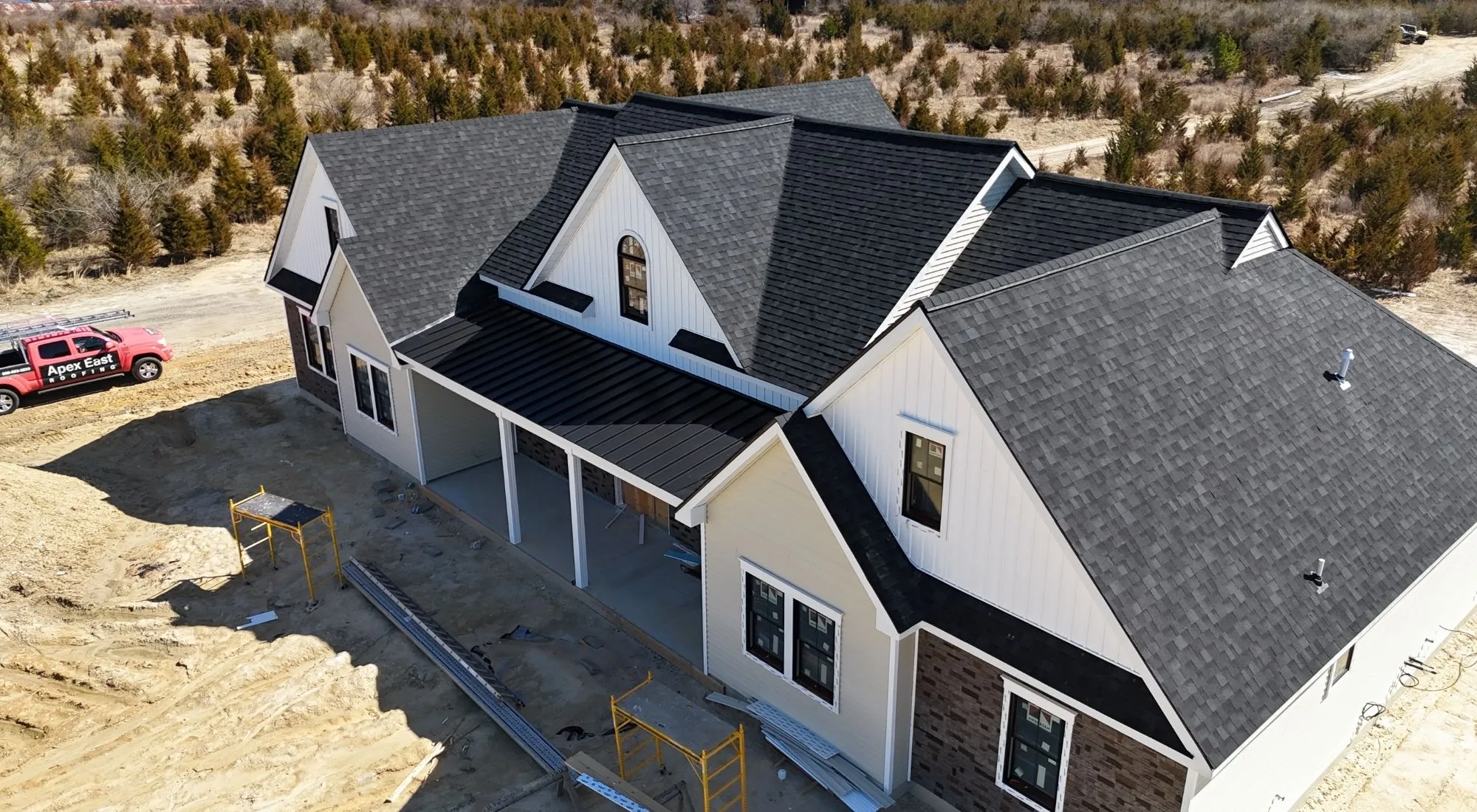
Upgrade to the Beauty and Durability of Standing Seam Metal Roofing With Apex East Roofing
A standing seam metal roof can give your property a clean, modern look while providing long-term durability and weather protection. The right results, however, depend heavily on the condition of your roof, the materials selected, and the quality of the installation.
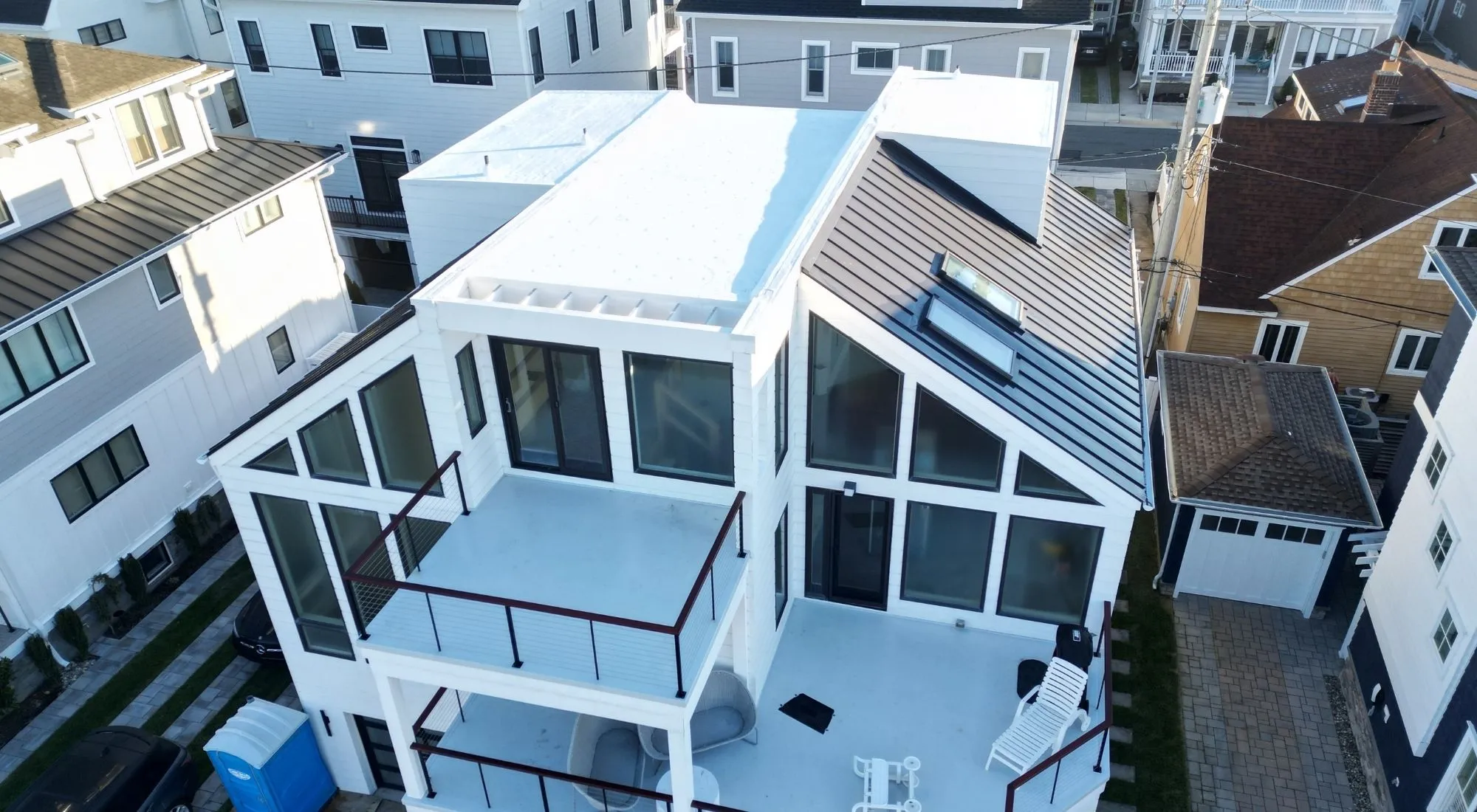
Apex East Roofing installs standing seam metal roofing for homes and commercial properties throughout South Jersey. Our team keeps customers informed throughout the process with photos, videos, and drone imagery before, during, and after installation, so you can see important details that may no longer be visible once the roof is complete.
As the only FORTIFIED Roof™ Certified contractor in New Jersey, Apex East Roofing also brings added knowledge of roofing practices designed with severe weather performance in mind.
If you are considering standing seam metal roofing, request a free roof inspection with Apex East Roofing. Our team can evaluate your current roof, explain your options, and help determine whether standing seam metal roofing is the right fit for your property.