When was the last time you actually thought about your roof? Not the leak you patched two summers ago or the shingles that went missing after that nor’easter. Just your roof, its age, condition, and whether it still has some good years left in it?
Most homeowners don’t think about it until water starts dripping into the living room.
However, the homeowners who come out ahead are the ones who treat their roof like the first line of defense it actually is, and stay ahead of problems before they snowball into something major.
If you’ve been wondering how often you should replace your roof in New Jersey, you’re already asking the right question.
In this post, we’re breaking down exactly what factors can lengthen or shorten that timeline, and the warning signs that scream it’s time to stop waiting.
Your Roof’s Lifespan Matters More Than You May Realize
Your roof is doing a lot more work than it gets credit for.
It’s not just shingles sitting on top of your house. There’s a full system at play: decking, underlayment, flashing, ventilation components, gutters, and the outer surface material all working in tandem.
When one part starts to fail, the rest of the system absorbs the stress. One weak link, left unaddressed, sets off a chain reaction that’s significantly more expensive to fix than the original problem would have been.
Being proactive about your roof’s condition is genuinely one of the better financial decisions a homeowner can make.
That’s where Apex East Roofing comes in. Whether you need a professional inspection, are dealing with storm damage, or have a roof approaching the end of its life, APEX East Roofing has the expertise to assess exactly where things stand and map out what needs to happen next.
How Long Does the Average Roof Last in New Jersey?
Most New Jersey roofs last between 20 and 30 years, though it depends on material type, installation quality, and how the local climate affects it over time. Roofs with premium materials in good condition can last significantly longer.
That range is a starting point, not a finish line.
The factors below determine where your roof lands on that spectrum and whether replacement might make sense sooner than the calendar suggests.
7 Factors That Affect How Often You Should Replace Your Roof in New Jersey
Not all roofing timelines are created equal.
Some factors influence frequency, meaning how many years your roof is realistically built to last. Others affect timing, meaning circumstances that might push replacement earlier than expected, regardless of age.
Frequency Considerations
#1: Roofing Material Type
Material type is the biggest single variable in any roof’s lifespan:
- Three-tab asphalt shingles last around 25 years.
- Architectural shingles last up to 30 years.
- Wood shingles last around 30 years.
- Metal roofing lasts between 20 and 70 years, depending on the type.
- Slate can last up to a century.
On the lower end, standard three-tab shingles can last 15 to 20 years, while dimensional architectural shingles span 25 to 30 years or longer.
Slate is the outlier, with lifespans estimated between 75 and 150 years by the National Slate Association, though the stone quality plays a significant role in that range.
For the majority of New Jersey homeowners with standard asphalt roofs, a realistic planning window is somewhere between 20 and 25 years.
#2: Climate and Seasonal Weather
New Jersey isn’t an easy place to be a roof.
The state’s climate is defined by cold, occasionally snowy winters, warm and humid summers, and a coastline regularly battered by nor’easters, tropical storm debris, and hurricane-force winds. That’s a punishing combination of stressors for any roofing system over a 20-plus-year lifespan.
Apex East Roofing offers storm damage inspections for exactly this reason. New Jersey weather doesn’t announce what it’s damaging, and a professional assessment after a significant event can catch problems while they’re still manageable.
#3: Installation Quality
Even the best materials on the market will have an early expiration date if any component of the system is installed incorrectly.
Improper flashing is among the most common culprits. It allows water to infiltrate at chimneys, skylights, and roof valleys long before the shingles show any visible wear. Nailing patterns, underlayment overlap, and ventilation integration must be executed correctly for a roofing system to perform as intended over its full lifespan.
This is why it’s important to work with a contractor who gets it right the first time. APEX East Roofing combines quality materials with craftsmanship that won’t leave you troubleshooting installation errors years down the road.
#4: Ventilation and Attic Conditions
Attic ventilation doesn’t feel urgent until it’s already causing damage.
In winter, poor ventilation creates the conditions for ice dams. Without functioning ridge or gable vents, hot and moist air becomes trapped, pushing attic temperatures and humidity to levels that measurably accelerate roof deterioration.
A roof installed over a poorly ventilated attic may fail years before its expected lifespan, regardless of the material.
Timing Considerations
#5: Repeated Repairs in the Same Area
An occasional repair is completely normal.
The concern is when the same section of the roof keeps coming back into the conversation. Repeated patching in the same area often signals a deeper structural issue or widespread material degradation that targeted repairs can’t resolve.
If you’ve had more than a couple of repairs in the same area within a short window, an honest professional assessment of whether continued repairs make financial sense is worth having sooner rather than later.
#6: Maintenance History
The foundation for protecting a roof’s lifespan includes:
- Biannual inspections
- Twice-yearly gutter cleaning
- Debris removal
- Prompt repair of minor damage
When done routinely, the results speak for themselves.
According to the National Roof Certification and Inspection Association, a proactive maintenance program can generally cost 1% to 3% of the total roof value per year. However, reactive repairs, like fixing a leak only after it’s stained your ceiling, can cost 10 times more due to the secondary damage to drywall, insulation, and electrical systems.
A roof that’s been regularly inspected and kept in good condition will reliably outlast one that’s been ignored, even if both were installed at the same time with the same materials.
#7: Insurance Inspections, Real Estate Sales, or Exterior Upgrades
Roof age has a real impact on homeowners’ insurance, and it tends to sneak up on people.
Some insurers refuse to renew policies on homes with roofs older than 20 years unless the roof passes inspection, and others won’t write new policies for those homes at all.
The scrutiny begins earlier than most expect. Documentation requests may start around 10 to 15 years, and coverage eligibility can narrow significantly by 20.
For homeowners planning to sell, an aging roof can complicate a transaction or reduce negotiating leverage.
If you know your roof is approaching the end of its projected lifespan, proactively replacing it before it becomes an insurance issue or a deal-breaker is often the cleaner, less stressful path.
Roof Replacement Warning Signs You Shouldn’t Ignore
Even well-maintained roofs eventually start to signal that the time is up.
Take these warning signs seriously:
- Curling, buckling, or cracking shingles – Material deterioration from age, heat exposure, or repeated moisture cycling
- Missing shingles or bare patches – Exposed underlayment is an open door for water infiltration
- Granule loss collecting in gutters or downspouts – Heavy accumulation signals significant asphalt wear
- Water stains on interior ceilings or attic surfaces – Active leaks or condensation from a compromised roof system
- Sagging roof sections – A structural concern that warrants immediate professional evaluation
- Moss or algae growth – Traps moisture against the surface and accelerates deterioration from underneath
- Daylight visible from inside the attic – If light gets in, water will too
- A roof at or past its expected material lifespan – Surface appearance isn’t always a reliable indicator of what’s happening structurally
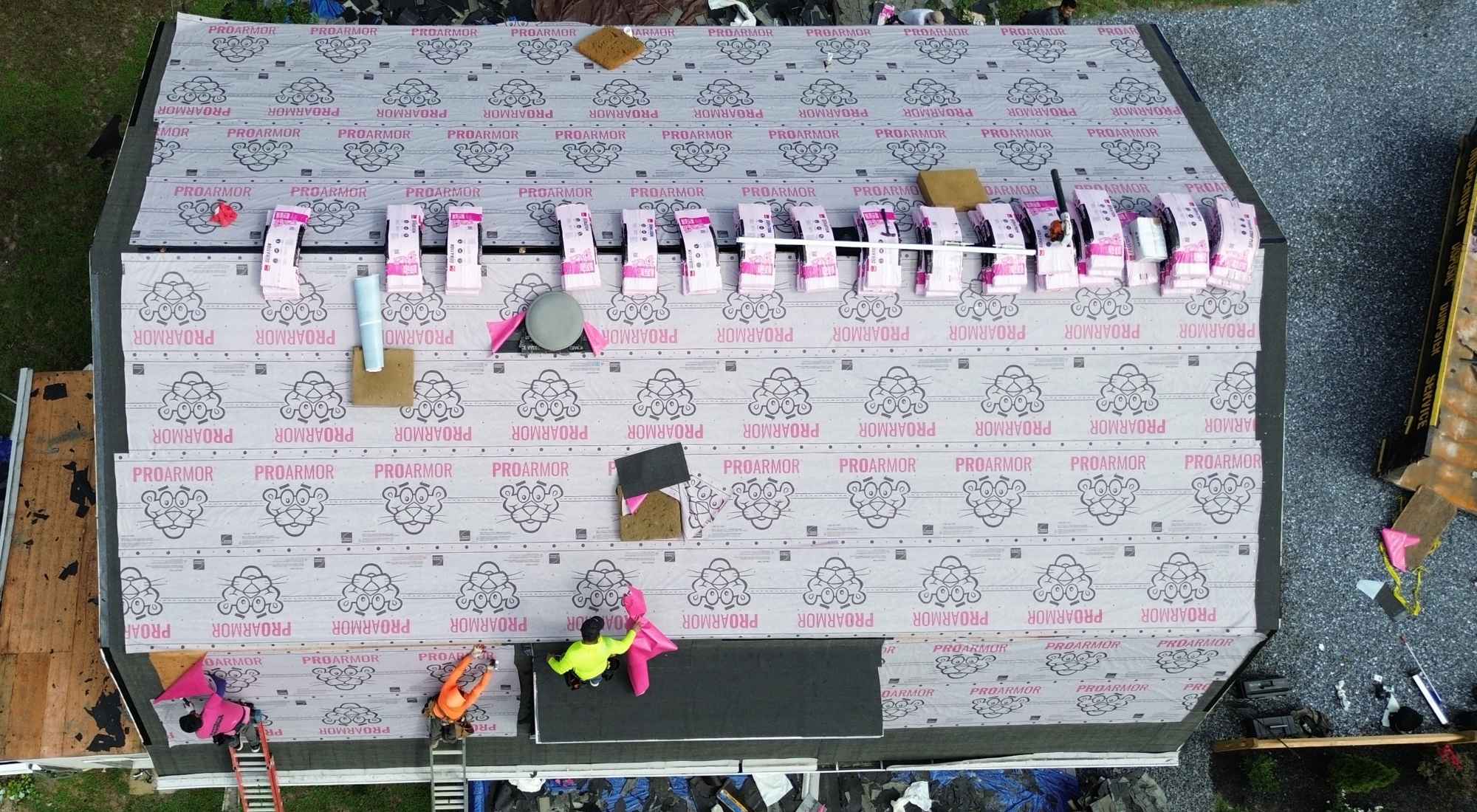
Apex East Roofing Has You Covered for Your Next Roofing Project
Whether your roof is flashing warning signs or you’ve simply started doing the math on its age, there’s genuine value in getting a professional opinion before a manageable situation becomes an urgent one.
Apex East Roofing serves New Jersey homeowners with thorough inspections, honest assessments, and quality installations built to withstand everything this state’s weather can throw at them.
Reach out to Apex East Roofing today to schedule your inspection and find out exactly where your roof stands.