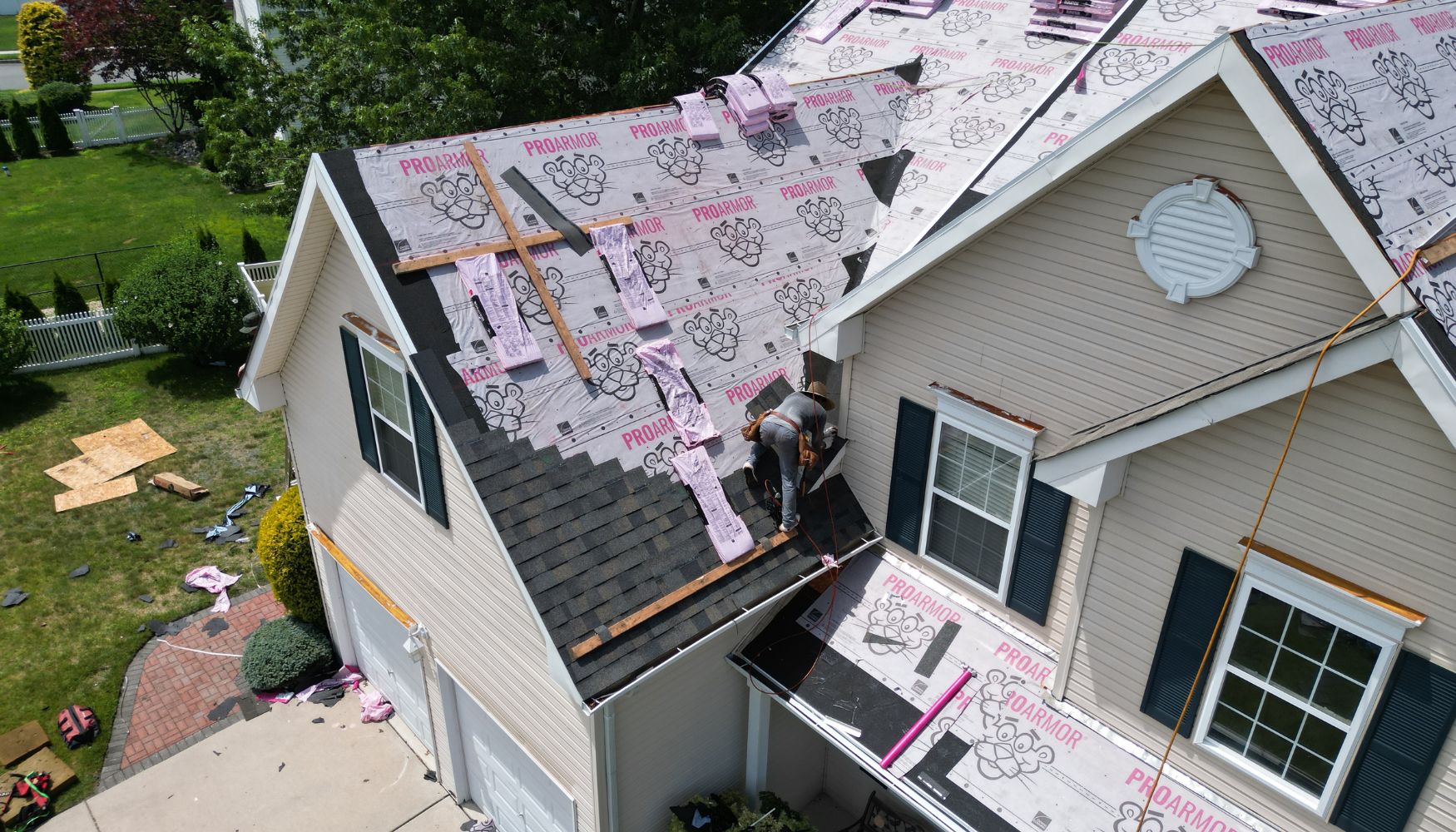
Rainwater taps steadily into a bucket in the hallway.
A dark stain spreads across the ceiling a little more each week.
Outside, curled shingles rattle in the wind while another South Jersey storm rolls in off the coast.
For many homeowners, replacing a roof feels impossible. The price is high. Insurance is confusing. And finding real financial help can feel like searching in the dark.
The good news is that several New Jersey roof replacement programs may help cover the cost through grants, loans, weatherization assistance, and local housing programs.
In this guide, we’ll walk through the roofing assistance options available in New Jersey, who may qualify, and how homeowners can take the first step toward a safer, stronger roof.
Table of Contents
- What Is the New Jersey Roof Replacement Program?
- 4 Types of Roof Replacement Assistance Available in New Jersey
- Common Mistakes To Avoid When Considering New Jersey Roof Replacement Programs
- New Jersey Roof Replacement Programs: FAQs
- Apex East Roofing: Local, Family-Owned Roofing Contractors Trusted by Homeowners for Roof Replacements Throughout South Jersey
What Is the New Jersey Roof Replacement Program?
When people search for a New Jersey roof replacement program, they’re often hoping to find one simple statewide program that pays for a brand-new roof.
In reality, there is no single New Jersey roofing program that fits every homeowner.
Instead, New Jersey residents may have access to several different forms of financial assistance, including:
- Housing repair grants
- Low-interest home improvement loans
- Weatherization assistance programs
- Senior and disability assistance programs
- County and local housing rehabilitation programs
- Nonprofit and emergency repair resources
Some programs are income-based. Others are designed for seniors, veterans, or homeowners dealing with storm damage or unsafe living conditions.
The challenge is figuring out which programs you may qualify for and whether your roof can wait long enough for approval.
That’s why many South Jersey homeowners start with a professional inspection first.
Apex East Roofing helps homeowners across South New Jersey understand the condition of their roof before small problems become expensive structural damage. They offer free roof inspections and even provide a fast 10-second roof pricing quote directly on their website, making it easier to plan ahead without the pressure or confusion many homeowners expect from roofing companies.
Below, we’ll break down some of the most common grants, loans, and New Jersey free roof replacement program options homeowners may be able to explore.
4 Types of Roof Replacement Assistance Available in New Jersey
#1: USDA Section 504 Home Repair Program
The USDA Section 504 Home Repair Program is one of the most well-known federal options for rural homeowners who need help fixing serious home issues, including roofing problems.
It provides:
- Loans up to $40,000
- Grants up to $10,000 for eligible seniors
This program is designed to help repair, modernize, or remove health and safety hazards from the home.
Key requirements include:
- Homeowners must live in USDA-designated rural areas
- Must be owner-occupants of the home
- Household income must not exceed 50% of the county’s area median income
- Must be unable to obtain affordable credit elsewhere
Loan terms are typically:
- 1% fixed interest rate
- Up to a 20-year repayment term
This program is often used for critical repairs like leaking roofs, structural damage, or unsafe roofing conditions.
Applications can be started through USDA Rural Development offices.
#2: Local County and Municipal Housing Grants
Across New Jersey, many counties and municipalities offer housing repair assistance programs that can help cover roof replacement costs for qualifying homeowners.
These programs often include:
- NJ Property Improvement Program (up to $5,000 in assistance in some areas)
- Community Development Block Grant (CDBG) funds, often ranging from $10,000 to $20,000, depending on the municipality
- Local city or county housing rehabilitation programs
These programs are typically designed for low-to-moderate income homeowners who need critical home repairs but cannot afford them out of pocket.
Common eligibility requirements include:
- Income limits based on area median income
- Proof of homeownership and primary residence status
- Property must meet program guidelines for repair urgency or safety issues
How to apply usually involves:
- Contacting your county housing authority or municipal office
- Completing an income verification and home assessment
- Submitting a repair application and waiting for approval or inspection
Because these programs vary widely by location, availability and funding can change throughout the year.
#3: Insurance-Based Roof Replacement
Homeowners insurance can be one of the most effective ways to replace a roof, but only when the damage qualifies under your policy.
Most policies cover:
- Wind damage
- Hail damage
- Storm-related roof failure
- Sudden accidental damage (depending on policy terms)
They typically do not cover:
- Normal wear and tear
- Aging or neglected roofs
- Pre-existing damage
Tips for filing a claim:
- Document damage immediately with photos and videos
- Schedule a professional roof inspection for written documentation
- File your claim as soon as possible after the storm
- Keep records of all communication with your insurance company
- Be present during the adjuster inspection if possible
A strong inspection report from a trusted roofing contractor can make a major difference in claim approval and payout.
#4: Solar Roofing Incentive Programs
Some homeowners explore solar roofing programs as a way to offset roof replacement costs, but it is important to understand how these incentives actually work.
These programs are tied to solar panel installation, not traditional roof replacement.
Common options include:
- Federal solar tax credits
- State and utility rebates
- Solar financing or leasing programs
Pros:
- Can reduce long-term energy bills
- May include partial roof upgrades during installation
- Incentives can offset a portion of upfront costs
Cons:
- Not a direct roof replacement program
- Requires solar installation to qualify
- Savings depend heavily on energy usage and system size
- Financing may still result in long-term payments
For homeowners considering this route, it is important to compare upfront roofing needs with long-term energy goals before committing.
Common Mistakes To Avoid When Considering New Jersey Roof Replacement Programs
Roof assistance programs can be helpful, but they also create confusion for homeowners who are already dealing with a stressful roof problem. A few simple mistakes can delay help or cost you money.
Here are the most common ones to avoid:
- Falling for “free roof” scams or unofficial websites claiming guaranteed approval
- Not verifying that your contractor is properly licensed and insured in New Jersey
- Ignoring insurance claim deadlines after storm damage, which can lead to denied coverage
- Applying to programs that are not legitimate or not currently funded
- Assuming every program covers full roof replacement, when many only cover partial repairs
- Waiting too long to act, allowing damage to spread, and repair costs to increase
Working with a trusted, licensed local contractor helps you avoid these issues and understand what is actually available versus what is advertised online.
Apex East Roofing is a licensed South New Jersey roofing company that performs free roof inspections and helps homeowners identify whether damage may qualify for insurance claims or local assistance programs, before costly delays or mistakes happen.
New Jersey Roof Replacement Programs: FAQs
What Is the Average Cost To Replace a Roof in New Jersey?
The average cost to replace a roof in New Jersey typically ranges from about $8,000 to $20,000 for most residential homes, depending on size, materials, and complexity. Higher-end materials or larger roofs can exceed $25,000.
Costs vary widely based on roof size, pitch, materials, and labor conditions.
In South New Jersey, asphalt shingle roofs are the most common and generally fall on the lower end of the price range, while metal, tile, or steep-slope roofs increase overall costs.
Other factors that influence pricing include:
- Extent of underlying damage or deck repair needs
- Number of layers that must be removed
- Roof accessibility and pitch
- Local labor and material pricing fluctuations
This is why many homeowners look into financing options, insurance coverage, or assistance programs before committing to a full replacement.
How Long Does the Average Roof Last in New Jersey?
Most roofs in New Jersey last about 15 to 30 years, depending on the material, installation quality, and weather exposure. Asphalt shingles tend to fall on the lower end, while metal and higher-end materials last longer.
New Jersey weather plays a big role in roof lifespan, especially due to coastal storms, humidity, snow, and seasonal temperature swings.
Key factors that affect roof longevity include:
- Type of roofing material used
- Quality of installation
- Ventilation and attic conditions
- Frequency of maintenance and inspections
- Storm and wind exposure over time
Regular inspections can help homeowners catch early signs of wear before they turn into costly repairs or full replacement needs.
How Long Does Approval Take for New Jersey Roof Replacement Assistance Programs?
Approval timelines for New Jersey roof assistance programs usually range from a few weeks to several months, depending on the program, funding availability, and required inspections. Emergency repair cases may move faster, while grant-based programs often take longer due to eligibility verification and waiting lists.
In general, timing depends on the type of program:
- Government grants and housing rehab programs: often 4 to 12+ weeks
- USDA-backed programs: can take several weeks to a few months
- Local county or municipal assistance: varies widely by funding cycles
- Insurance claims: typically 2 to 6 weeks after inspection, but can take longer if disputes arise
Delays are common when documentation is incomplete or when program funding is limited for the year.
To avoid setbacks, homeowners should:
- Apply as early as possible once roof damage is noticed
- Gather income, ownership, and property documents in advance
- Respond quickly to inspection or follow-up requests
- Work with a licensed roofing contractor to document roof condition clearly
Having a professional inspection upfront can also help speed up both insurance and assistance approvals by providing clear evidence of roof damage.
Apex East Roofing: Local, Family-Owned Roofing Contractors Trusted by Homeowners for Roof Replacements Throughout South Jersey
Apex East Roofing is a family-owned roofing company serving homeowners throughout South Jersey with a focus on residential roof replacement and repair, along with commercial roofing services.
Homeowners often turn to them for straightforward help understanding their roof condition and next steps, especially when dealing with:
- Storm or wind damage claims
- Aging or leaking roofs
- Unclear eligibility for assistance programs
- Urgent repair needs that cannot wait for long approval timelines
They offer:
- Free roof inspections
- Fast 10-second roof pricing quotes online
- Guidance on whether insurance or assistance programs may apply
- Clear, no-pressure recommendations based on roof condition
For many homeowners, the hardest part is not the roof itself, but figuring out where to start. A local, experienced contractor helps bridge that gap so you can move forward with clarity and confidence.